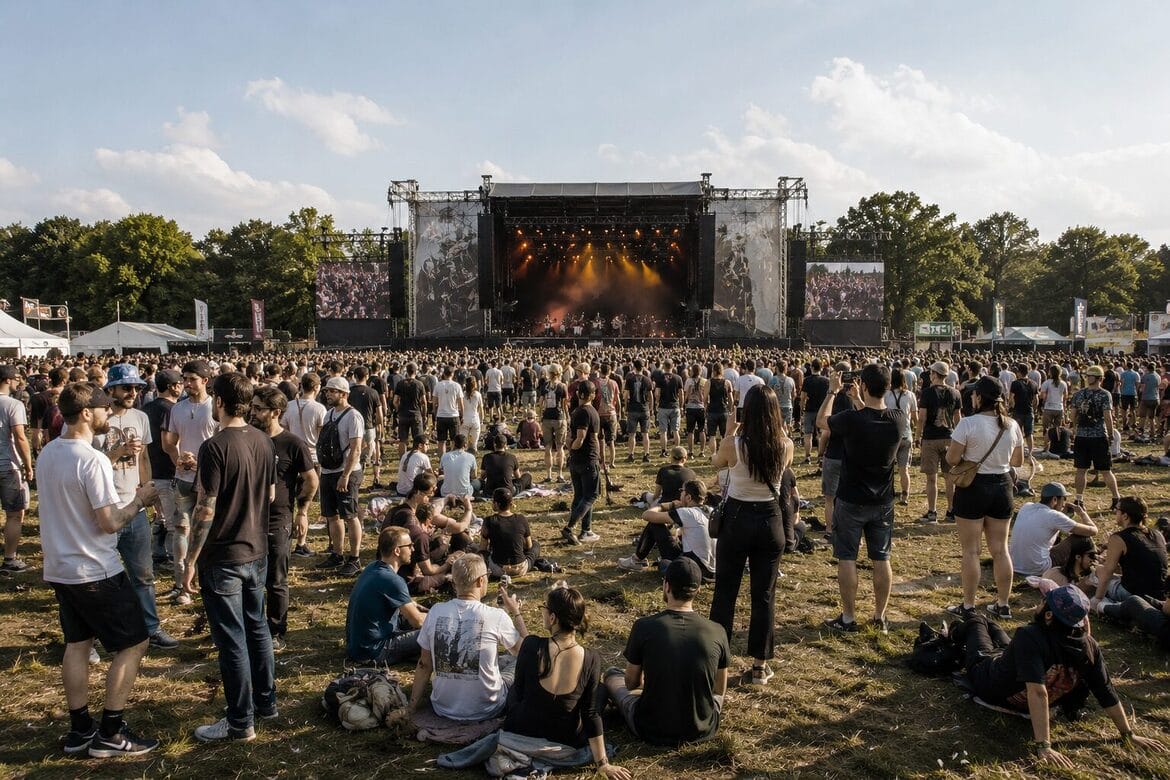
Music festivals have grown larger every year. The 2026 season features events with more than one hundred and forty bands spread across five or more stages. Headliners draw massive crowds. Mid-tier acts, however, face empty fields and distracted audiences. This oversaturation damages career momentum for emerging artists. Festival organisers may need to rethink their booking strategies before the bubble bursts.
How Lineup Saturation Actually Works
A festival has finite ticket sales and limited hours. Adding more bands does not expand the audience. It fragments attention across competing stages. When six acts perform simultaneously, each draws a smaller crowd. Headliners still fill their fields because fans arrive specifically for them. Mid-tier performers scheduled against popular side-stage attractions play to dozens rather than thousands. This dynamic has worsened steadily since 2022.
Too Many Choices Reduce Engagement
Choice overload affects entertainment beyond music. Online platforms face similar challenges when presenting too many options simultaneously. Casino online pokies designs its interfaces to highlight selected categories rather than displaying everything at once.
Casino online operators have learned that presenting hundreds of games without curation reduces player satisfaction. Online pokies are organised by theme and volatility, helping users narrow choices quickly. Casino for Australian players rotates featured titles weekly, preventing decision paralysis.
The principle applies directly to festival programming. A fan facing fifteen overlapping sets cannot properly support any of them.
Empty Crowds Damage Careers Beyond Lost Attention
The damage to mid-tier acts is not just emotional. It affects their finances, bookings, and industry standing.
Lower guarantee fees for subsequent festivals – Bookers check social media clips from previous performances. Empty crowds lead to lower offers or outright rejection.
Reduced merchandise sales – A musician playing to two hundred people sells far fewer t-shirts than one playing to two thousand. Those sales often cover touring costs.
Weaker industry buzz – Talent buyers, journalists, and label scouts skip overlapping sets. An artist performing against a popular nostalgia act gets completely overlooked.
These consequences compound across a single festival season. An artist playing six festivals with poor attendance may struggle to book any the following year. The downward spiral begins with programming decisions, not artistic quality.
Why Organisers Keep Adding More Bands
Festival promoters have reasons for saturation, even if artists suffer. Understanding their logic explains why the trend continues.
- Ticket price justification – A hundred and forty bands sounds better in marketing materials than eighty bands, even if fans cannot see them all.
- Backup for cancellations – A deep roster means losing one or two acts does not force refunds or schedule gaps.
- Bundling emerging talent – Labels pay lower fees for multiple artists when festivals take entire rosters from a single agency.
- Regional exclusivity clauses – Booking many acts prevents competing festivals from signing them for the same season.
These rationales serve organisers, not audiences or artists. Festivals prioritise their own risk management over meaningful performance opportunities. The model works for shareholders but erodes the live music ecosystem over time.
What Successful Mid-Tier Acts Do Differently
Some artists have adapted to saturated lineups without waiting for organisers to change. Their strategies offer a path forward for frustrated performers.
- Schedule adjacent unofficial shows – Playing a small club the night before a festival guarantees a full room and merchandise sales.
- Negotiate off-peak time slots – Performing during opening hours on the main stage beats any side stage slot in the afternoon.
- Focus on festivals with fewer stages – Some boutique events deliberately cap lineups at thirty acts total, ensuring every band gets attention.
- Record every set for social media – A well-lit, well-sounding video clip posted immediately creates buzz regardless of live crowd size.
These tactics require extra work and sometimes out-of-pocket expenses. However, they shift control back to the artist. Relying entirely on festival programming is no longer a viable career strategy.
What Festival Lineups Will Look Like in 2028
The current saturation model cannot continue indefinitely. Several trends suggest a correction within two years. Smaller festivals will return to eighty-act lineups as a point of differentiation. Major events will reduce overlapping hours by extending festival duration from three days to four. The most innovative organisers will introduce curated viewing sessions where only three stages run at any time. Artists should watch booking patterns closely and prioritise quality of exposure over quantity of appearances.
 Add as a preferred source